Rose Oud Perfume: Why It's Trending
There are fragrance pairings that feel inevitable. Rose and oud is one of them. Two of the oldest, most storied ingredients in perfumery, one luminous and floral, the other dark and resinous, meeting in a composition that has captivated noses for centuries. And right now, rose oud perfume is having a cultural moment that goes well beyond niche circles.
Fragrance enthusiasts who once debated whether oud was "too much" are reaching for rose-oud compositions as their everyday signatures. The pairing has crossed from insider knowledge into the mainstream, and understanding why reveals something interesting about where fine fragrance is headed.
Why Rose and Oud Work So Well Together
At its core, the rose-oud accord is a study in contrast that somehow resolves into harmony.
Rose is radiant, open, and feminine in the most classical sense. Its scent is immediately recognizable: dewy petals, a soft sweetness, and a gentle warmth that has made it the most beloved floral in perfumery for thousands of years. Oud, on the other hand, is dense, smoky, and complex. Derived from the resin of the Aquilaria tree, it carries a rich woody depth with almost leathery undertones that read as both ancient and magnetic.
When these two notes meet, something unexpected happens: they don't fight. The rose softens oud's intensity and brings it into the light. The oud gives rose structure and permanence, lifting it out of pure florality and into something earthier, more textured, and more lasting on skin. It is presence meeting radiance — and that tension is what makes the accord so compelling.
The result is a floral oud composition that is simultaneously bold and wearable, dramatic and intimate. This interplay is part of what has kept the rose and oud fragrance pairing at the center of niche perfumery for decades. It satisfies something that other combinations don't: the desire for a floral that doesn't feel light or transient, and a woody scent that doesn't feel purely masculine or austere.
The Heritage: Where the Rose Oud Perfume Accord Comes From
To understand why rose oud perfume resonates so deeply, it helps to trace where the accord originates. In Middle Eastern perfumery, rose and oud have been paired for centuries. Arabian attar traditions, highly concentrated oil-based fragrances applied to the skin, frequently combined Damask rose with aged agarwood oud. These compositions were rich, deeply sensory, and built for longevity. They were also status symbols, worn at celebrations, used in prayer, and gifted as expressions of hospitality and respect. The pairing carried meaning as much as it carried beauty.
Western niche perfumery began borrowing seriously from these traditions in the early 2000s, as houses like Amouage, Montale, and later Tom Ford brought oud into a broader conversation. The rose-oud accord became a signature vehicle for that cultural translation: familiar enough to Western noses through the rose, but deepened and complicated by the oud in ways that felt new and luxurious.
What has shifted most recently is the interpretation. Traditional Middle Eastern rose oud perfume tends to be dense, oil-forward, and intensely saturated. Contemporary Western takes on the same pairing lean toward balance: the rose is cleaner, sometimes lifted with citrus brightness; the oud is more refined, often supported by guaiac wood or tonka bean to soften its smokier edges. The result honors the accord's origins while wearing with the kind of ease that modern life demands.
Western vs. Middle Eastern Interpretations: What's Different
Middle Eastern interpretations prioritize depth and projection. The rose used is often full-bodied Taif or Bulgarian Damask, applied without restraint. The oud leans dark, sometimes animalic, and the overall effect is a fragrance that fills a room and stays on skin for days. These are bold rose perfumes with oud at their most powerful, and for wearers who love that density, they are extraordinary.
Western niche and contemporary interpretations work differently. The rose is often cleaner, sometimes brightened with bergamot or a dewy facet that makes it feel more contemporary. The oud is more moderate: present and grounding, but balanced so that it doesn't overwhelm. Additional base notes like sandalwood, tonka bean, guaiac wood, or vanilla are commonly layered underneath to smooth the transition between the two hero notes and extend the dry-down in a way that feels refined rather than heavy.
Both approaches are valid and both produce beautiful results. The choice between them is a matter of how you want to wear the accord, as a statement or as a signature. Fragrance communities have documented both traditions extensively, and reading those comparisons side by side is one of the best ways to develop a sense of which direction suits your skin and your life.
Breaking Down the Notes: Damask Rose, Turkish Rose, Oud, and Beyond
A great rose oud perfume is rarely just those two ingredients. The surrounding construction shapes how the accord reads on skin and how it evolves over time.
Damask Rose is the classic choice. Grown primarily in Bulgaria and Turkey, it has a full-bodied, slightly spicy warmth that distinguishes it from lighter rose varieties. It smells like rose at its most essential: lush, slightly honeyed, and deeply floral without being sweet.
Turkish Rose carries a similar richness but with a slightly more herbal, green edge. When blended with Damask, the two together produce a rose note that feels dimensional and real, more like petals than like a single-note extraction.
Oud contributes the woody, smoky, resinous depth that anchors the composition. In a well-balanced modern rose oud fragrance, oud sits underneath the floral heart, providing structure without competing for attention. It's the reason the scent lingers: oud's molecular density means it holds on skin long after the top and heart notes have evolved.
Guaiac wood is a common supporting note in contemporary rose-oud compositions. Softer than oud, slightly smoky, with a subtle sweetness, it bridges the gap between the floral and the woody without adding heaviness.
Tonka bean adds a smooth, almost vanillic warmth that rounds out the dry-down and gives the composition a skin-like softness. It's the note that makes an oud rose EDP feel like it belongs to you: close to the skin, warm, and personal.
Together, these elements create a composition that moves. Fresh and expressive on opening, deeper and more textured through the heart, and smooth and intimate as it settles into the base.
What Makes a Modern Rose Oud Perfume Wearable
The question fragrance-curious buyers often ask is whether a rose oud perfume can work in everyday life, not just for evenings or special occasions. The answer is yes, but only when the composition is intentionally built for it.
Older, more traditional rose-oud formulations were designed for projection and ceremony. They are extraordinary in the right context, but they can feel like too much for a Tuesday morning commute. Modern rose oud perfume solves this by rethinking the balance.
The rose is calibrated to feel luminous rather than heavy. The oud is refined: present and grounding, unmistakable, but balanced so that it doesn't overwhelm. Supporting notes like guaiac wood soften the composition's edges, and warm base notes like tonka bean create a dry-down that feels intimate rather than loud. The result is an oud rose EDP that reads as sophisticated and considered without requiring an occasion to justify wearing it.
This wearability is also connected to concentration. A well-formulated Eau de Parfum at 20% fragrance oil concentration will give genuine longevity without the density of a pure oil or extrait. The scent projects cleanly at the outset, then settles into a skin-close warmth that lasts through the day. Understanding how fragrance notes build and evolve makes this arc easier to read and easier to appreciate when you're wearing something as layered as rose and oud.
Indira's Oud Rose: A Modern Rose Oud Perfume Built for Real Life
Oud Rose Intense is a direct expression of this modern interpretation of the accord. It is not a delicate rose — but it is not a heavy one, either.
The opening is immediate and expressive: Damask and Turkish rose together, full-bodied and radiant, with none of the powdery softness that makes some rose fragrances feel dated. The rose here has presence. It opens confidently and announces itself without apology.
As the scent unfolds, oud enters, grounding the florals, adding depth and warmth, pulling the composition into something more complex and layered. This is where the tension of the accord lives, and where a skilled formulation matters most. Oud Rose keeps the balance: the rose doesn't get swallowed by the oud, and the oud doesn't become a background whisper. They meet in the middle.
The dry-down is where the fragrance becomes genuinely personal. Tonka bean adds smooth richness, and guaiac wood lends a gentle woody warmth that feels natural on skin. The result is a dry-down that is soft, deep, and lasting, the kind that prompts people to lean closer.
Fragrance Notes at a Glance:
-
Top: Damask Rose, Turkish Rose
-
Heart: Oud
-
Base: Tonka Bean, Guaiac Wood
Vibe: Intense. Deep. Bold.
Perfect for: Everyday elegance, bold moments, and lasting impressions.
Formulated as a rose oud perfume Eau de Parfum at 20% fragrance oil concentration with premium French oils, it is vegan, IFRA-compliant, and free of parabens, phthalates, and sulfates. Clean formulation is non-negotiable here — what goes on your skin matters as much as how it smells.
Who Wears Rose Oud Perfume, and When
The rose-oud accord tends to attract a specific kind of fragrance wearer: someone who has graduated beyond light florals and fresh citrus, who wants something with more character and longevity, but who isn't ready or interested in the pure austerity of a single-note oud.
Oud rose perfume women most often reach for is this kind of composition: deeply floral but grounded, sophisticated without being unapproachable, and wearable across the full arc of a day.
In terms of when it works best: the cooler the weather, the richer the accord reads. Autumn and winter are natural homes for a rose oud perfume, when the skin's warmth has a different relationship to dense base notes. A well-balanced modern formulation wears beautifully through spring evenings and in the evening air of a warm summer night as well.
Occasion-wise, rose oud belongs anywhere you want to leave an impression: polished workdays when you want a signature that speaks quietly but clearly, dinner plans where depth and presence matter, evening events where the fragrance can fully unfold in the warmth of the room.
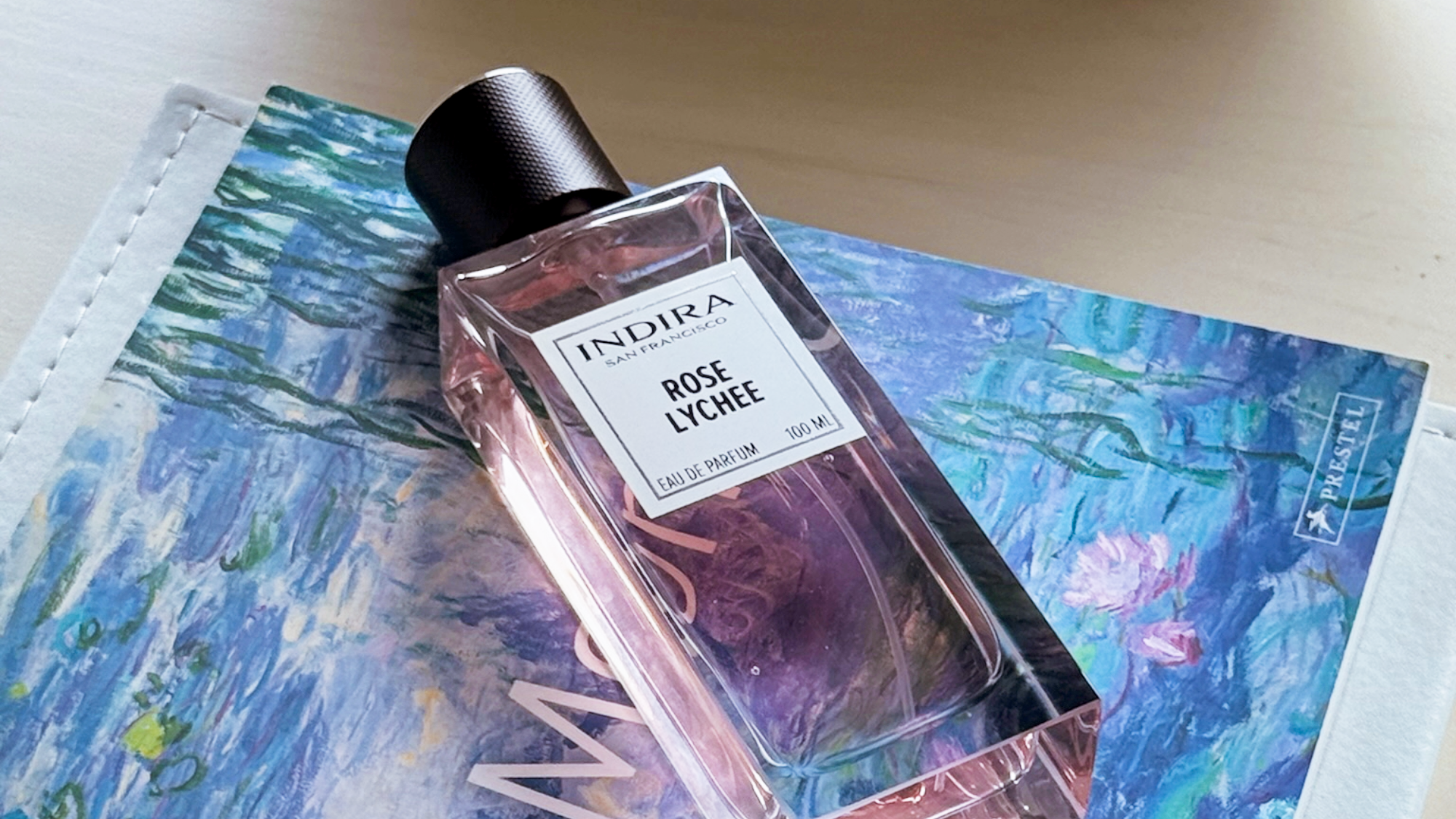
For something on the lighter end of the rose spectrum, Rose Lychee takes a citrus-lifted approach: bright and contemporary where Oud Rose is deep and textured. The two together map the full range of what rose can do.
Why Rose Oud Perfume Is Trending Right Now
The rise of rose oud perfume in Western markets isn't accidental. Several converging forces have brought this accord to its current cultural prominence.
Fragrance education has expanded dramatically on social media. TikTok and Instagram have introduced millions of buyers to niche perfumery concepts: fragrance notes, longevity, sillage, the difference between an EDT and EDP. As buyers have become more knowledgeable, they've developed more specific tastes. Rose oud, with its depth and complexity, is exactly the kind of sophisticated choice that an educated fragrance buyer gravitates toward.
There is also a broader appetite for cultural crossover in beauty. Middle Eastern fragrance traditions, including attar and bakhoor, dense and oil-based compositions, have become increasingly visible in Western markets. Buyers are curious about what those traditions feel like, and modern rose oud perfume offers an accessible entry point: familiar enough to feel approachable through the rose, complex enough to feel new through the oud.
Finally, there is the question of longevity. As buyers invest more thoughtfully in fragrance, they want something that performs. Oud-based compositions, with their dense molecular structure, consistently deliver genuine all-day wear. A rose oud perfume isn't just beautiful: it's a reliable choice for someone who wants their scent to last.
The result is a category that is both timely and timeless. Rose and oud have been remarkable together for centuries. Right now, a new generation of fragrance wearers is discovering why.
The Bottom Line
Rose oud perfume is not a trend in the disposable sense. It is an accord with centuries of heritage that is finally finding the broader audience it deserves. If you've been curious about it, whether you're a fragrance enthusiast or a first-time buyer exploring beyond the familiar, it is worth discovering.
Let it settle into your skin. Notice how it changes.
That's what great fragrance does.